Archive for the 'make' Category

A clean studio to start the year!

I’ve spent some days giving my studio a huge clean-up, including moving and cleaning shelving, washing down the walls, and some reorganising. It took a lot of effort but it feels worthwhile. Apart from anything else, my work often generates a lot of dust and particles that settle everywhere, and although I use safety gear I worry a little about the health risk.

There seems to be so much surface space, though I know it won’t last for long!


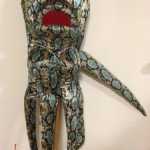
A little hand

I’ve just started making a marionette. I like how this little hand is shaping up.

Giant remote control snail

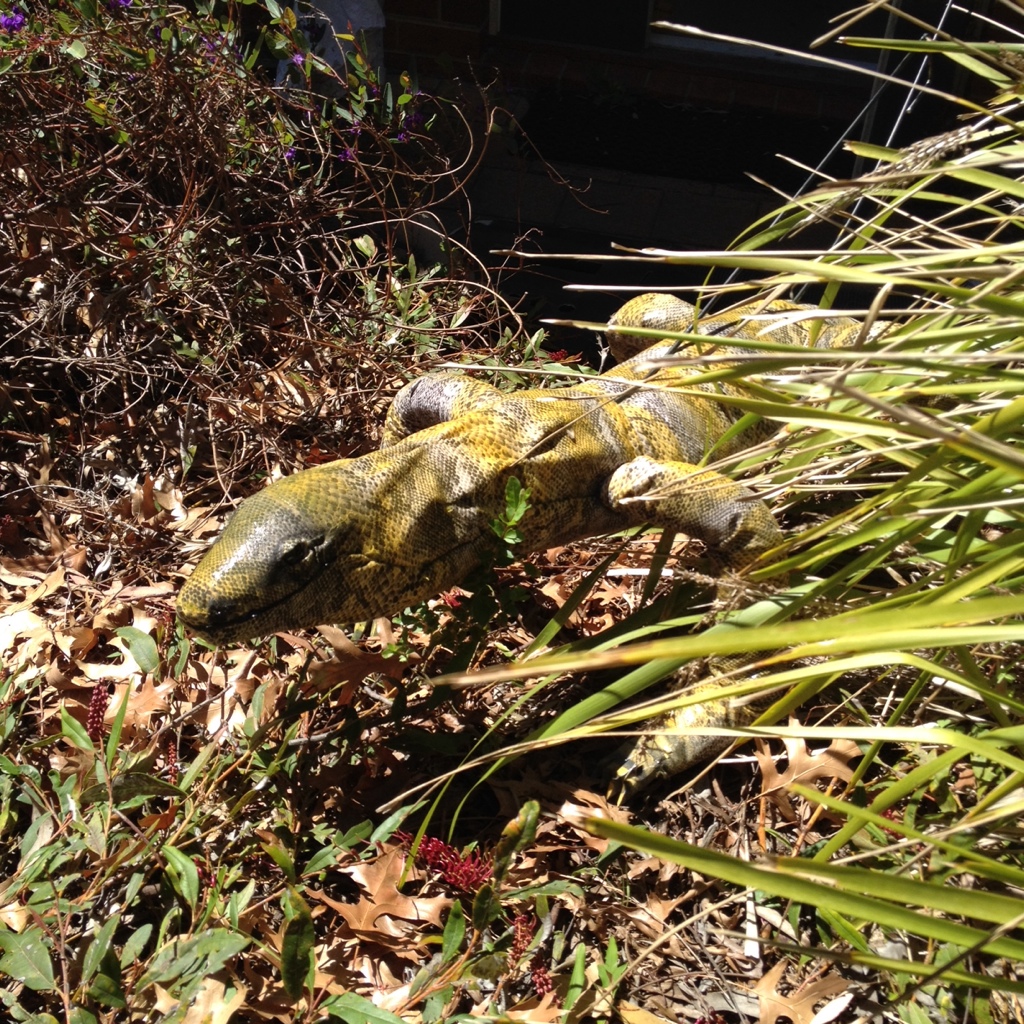
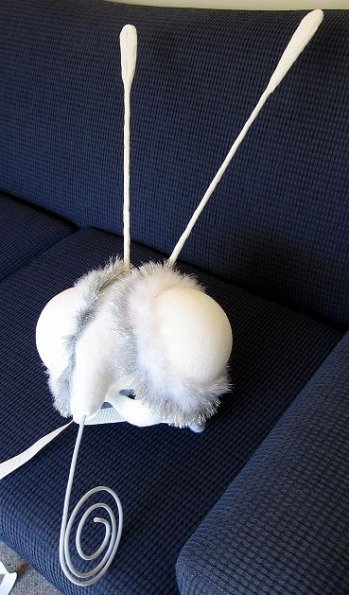
This is a giant remote control snail that I recently made for The Fool Factory for their promotion of National Science Week 2011. It’s about a metre long, fitted onto the chassis of a remote control car, and has eyes that move from side to side. It’s made to look somewhat like Australia’s largest land snail, the Giant Panda Snail, which inhabits sub-tropical forests in Queensland.

I’ve posted photos of the making process. The shell is shaped polystyrene layered with  paper mache, and then painted. The body is made from thin PE foam sheeting covered by a strange irregular and stretchy netted fabric which I used for the skin texture, then painted. Inside the snail there is a cage that separates and protects the body from remote control chassis, and a small aluminium structure that holds the servo motors that rotate the eyes.

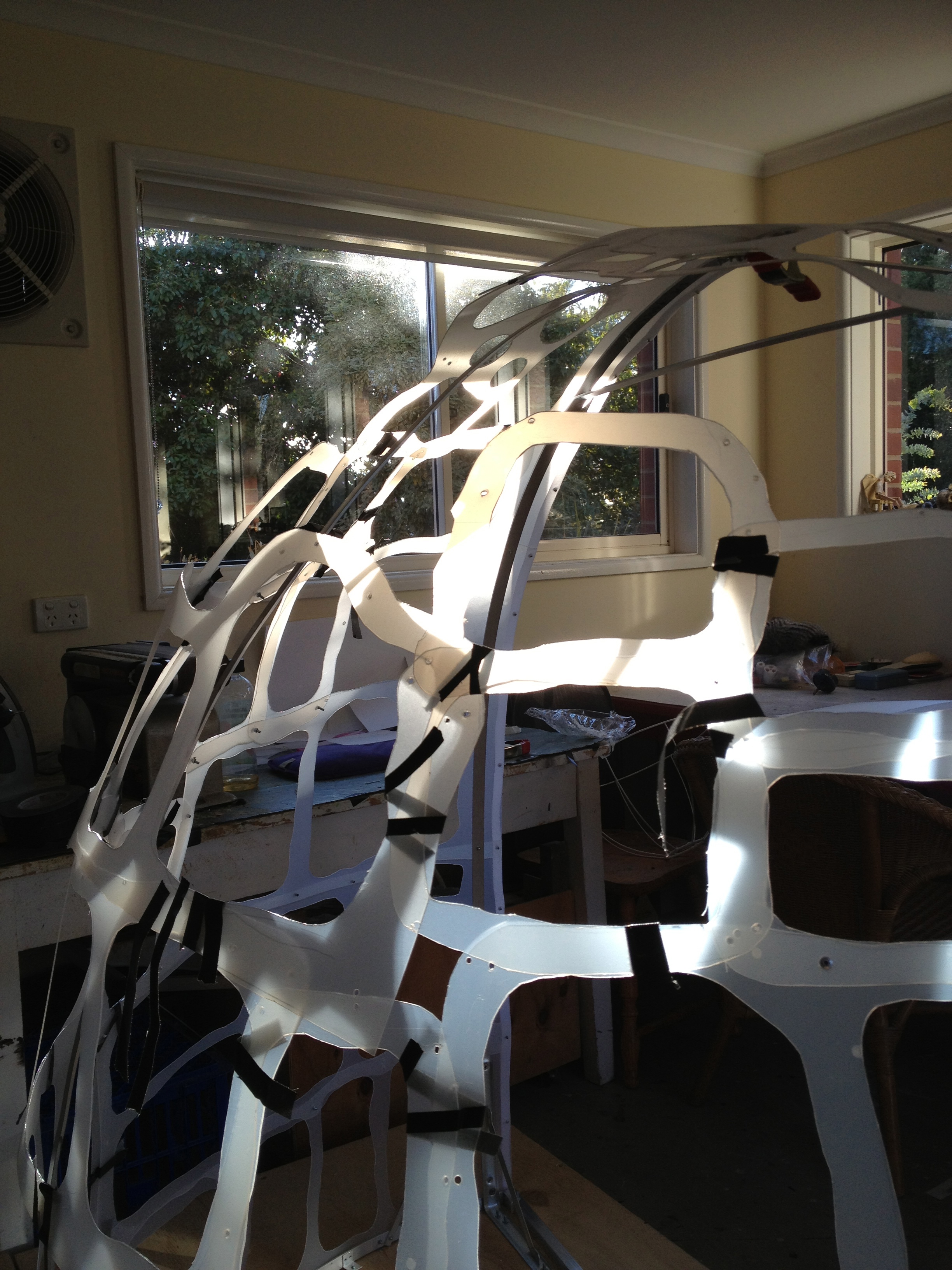
I’m also like the following picture of the snail in my studio, although it reminds me of when we first moved into our house and there was a small crack by the back door where leopard slugs used to come in during the night to eat the cat food in the laundry! Worse was when they used venture further into the house and we could accidentally tread on them barefoot if we were up in the night tending babies – eew!

Some thoughts on 3D printing and the arts

If you want to blow your mind, take a journey into the revolutionary realm of 3D printing. Rapid prototyping has been around for about 20 years, but 3D printing seems now to be quickly becoming a viable manufacturing process for a wide range of materials and objects. There are lots of examples, of which the following are only a small selection:

Like other disruptive technology, 3D printing looks as if it will follow the path of offering the ability to decentralize and customise, and to make unique things cost effectively.

It’s interesting to consider what impact this is already having and going to have on artists and how they make things, as it becomes mainstream. Imagine, we can digitally sculpt or scan something in 3D (or photograph it, send the photos to somewhere like Photofly to get them stitched into a 3D scan), then send the files to a fabricator or perhaps even our own 3D printer , and there it is. There is the obvious debate between new and old, manufactured and handmade, and whether quality will be enhanced or compromised.  Most likely 3D printing will become an additional useful tool for some processes, components and items, and competency in these technologies will become more expected in the arts industry.  And, entirely handmade is likely to become rarer but more valuable.

Ladybird puppet

This is a ladybird glove puppet I recently made for the Riverstone Family Centre’s early literacy program.  She has a little leather library bag over her shoulder in which she is carrying a little book!

There are some more photos of her in my photoset at Flickr, and a short video o f her.

Windmill prop in progress

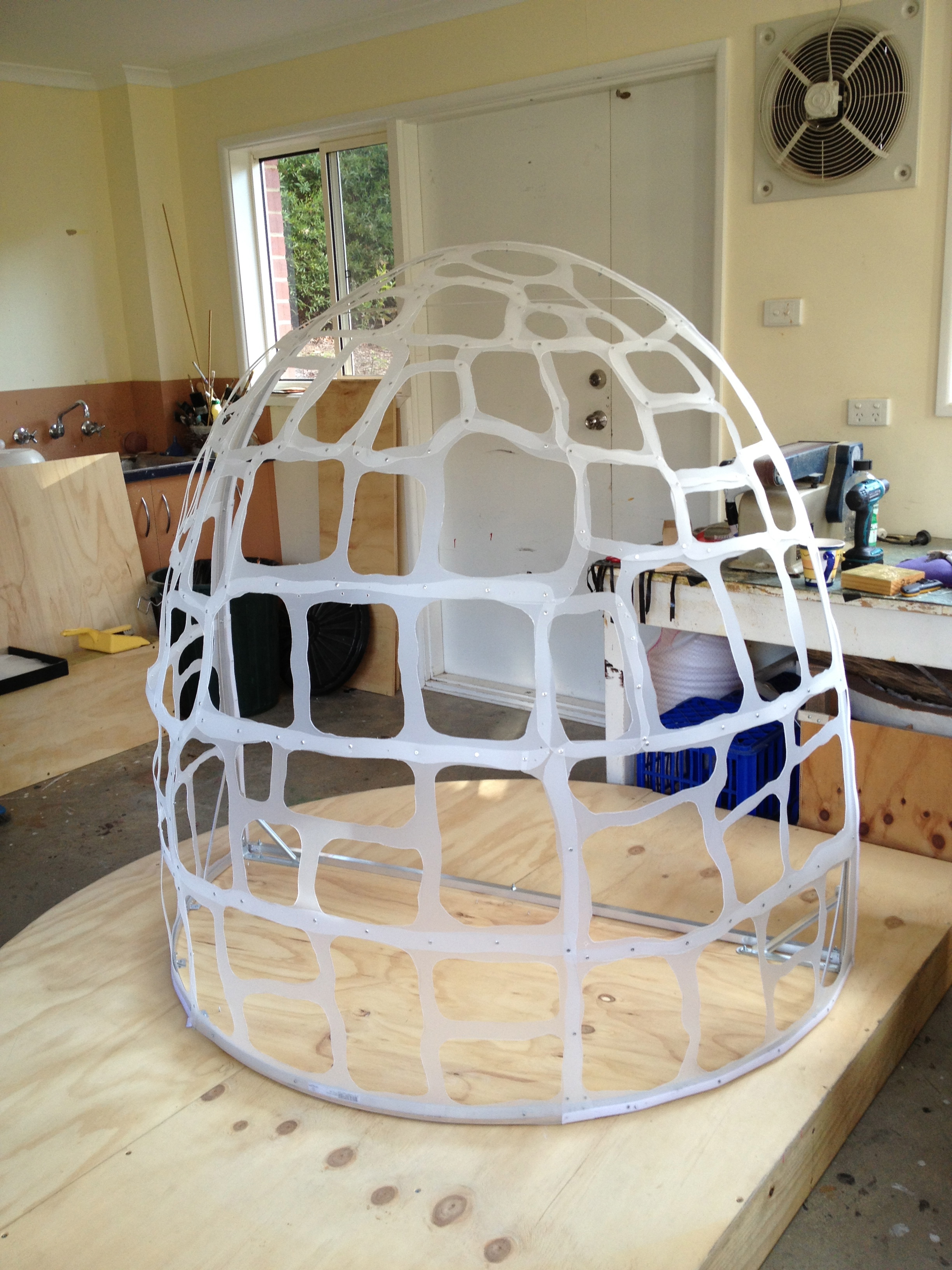
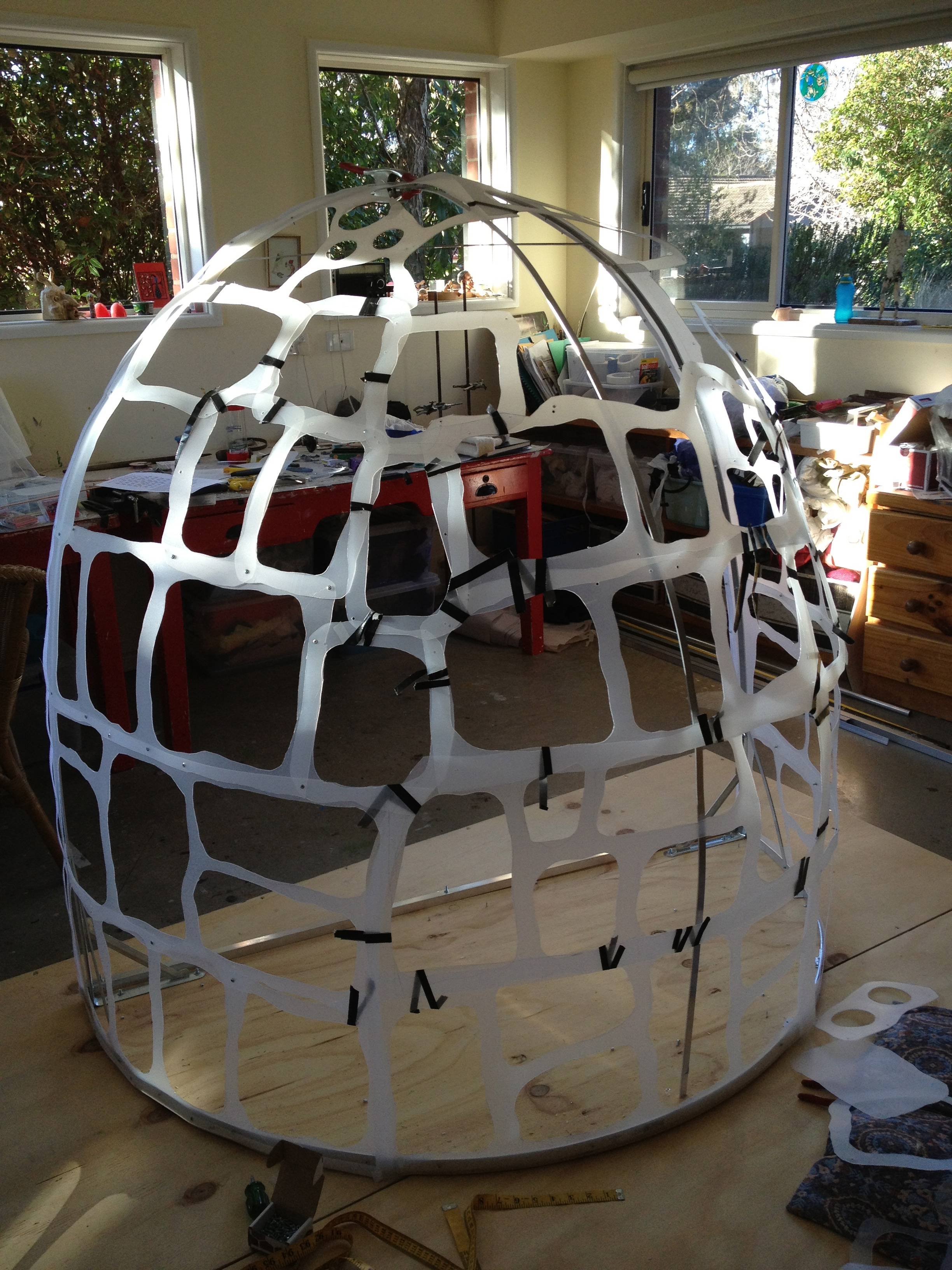
I’m working on a windmill prop at the moment. I made the base structure a month or so ago, but am now back to making the blades. The windmill itself is very simple, but it’s size – it will stand 3 metres high – makes it logistically tricky to work on in my studio. It’s coming together nicely, though, and I’m enjoying it.


Mech details for a Ningyo- Joruri puppet head

mech details for a ningyo-joruri puppet head

(enlarge)

Someone asked me how the movement of the Ningyo-Joruri puppet head that I made during Nori Sawa’s masterclass a few years ago worked , so I’ve drawn a diagram on my iPad to illustrate the mechanism. It makes more sense if you look at in context with my photoset from the class, and perhaps with the original blog post.

Giant garden fork

I made this giant garden fork prop for  The Fool Factory recently. There are some making photos in my portfolio at Flickr. Before I handed it over we had fun posing with it like the farmer couple in Grant Wood’s American Gothic painting and various other silly things. It definitely invites comic scenarios.

Homemade yoghurt

I’ve been making yoghurt for a couple of months now, and I’m still blown away by how easy and good it is! I got my recipe from searching Down to Earth.

Here’s what I do:

  • Mix 1 1/4 cups of powdered milk into 750ml cold water. (Or just under a litre of any kind of milk; if powdered, mix according to recommended proportions and add an extra 1/4 cup of powder)
  • Heat milk in a saucepan until it is really really about to boil over.
  • While the milk is heating pour boiling water into the pot the yoghurt will set it, and its lid, to sterilize them. I’m using a kg pot left over from when I last bought yoghurt.
  • Tip the water out, pour the milk in.
  • Put on the lid and let the milk cool to only just warm; this takes an hour or more.
  • Stir in three or so tablespoons of good fresh live-culture natural yoghurt.
  • Put on the lid again, wrap the pot in a towel and leave it untouched in a warm place for about 12 hours.
  • Voilà! Yum!

I’ve taken to making this while I am preparing dinner, then it sits by the fire overnight, and is ready in the morning. But I’ve also had success with putting the pot in an esky with some containers of boiling water. And yes, once you make one batch you can use it to make the next.

Makedo reusable connectors

How to makedo – extended from MAKEDO on Vimeo.

I’d love to have a play with these cool Makedo reusable connectors!

« Previous PageNext Page »