Foam Latex Puppetmaking Tutorial

foam

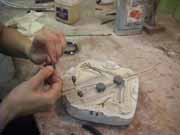
Boing Boing points to Kathi Zung, a NYC maker of foam latex puppets used in animated videos and films, and in particular to her Do-it-yourself Foam Latex Puppetmaking 101 tutorial on DVD. I’d like to try something like that sometime.

This is the same technique that was used to make the Leunig Animated series that brought Michael Leunig’s cartoons to life on SBS TV a few years ago. An exhibition showing how it had been made followed, and I loved being able to see in detail how it had been done. Strangely, while the animations themselves were really good, I felt some tension to do with the whole production of animating them weighing down the original whimsy of the cartoons.

Updated links  2015.
Spike

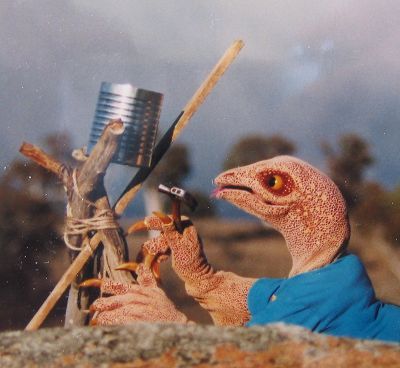
I was flipping around the channels on the TV a few minutes ago trying to find CNN. (This sounds nonchalant, but it really means beating the living daylights out of the remote to make it work). Instead, I landed up on the Information Channel – I have no idea what this usually shows, I will have to ask the kids – and much to my surprise it was showing tumblegum.com, a pilot show that I helped make puppets for in 1999. My puppet was Spike, the larrikin goanna, played beautifully by Peter Wilson, Australia’s most outstanding puppeteer. Here’s Spike on location at Googong Dam:

Spike

He was about 6 feet long, and had huge claws made from chopping board plastic (which incidentally is a very useful material, being relatively strong and soft to work). I have pictures of him lolling immodestly on our trampoline in the sun while his paint dried.

As far as I know the show never made it beyond the one-off pilot, though it was marketed with great optimism overseas at Cannes and in China, so it was unexpected and good to see it at least getting a showing. As a puppet maker, you have to get used to the reality that the time it takes to create a puppet is usually quite out of proportion to the time it’s actually on stage or screen. So it’s a nice feeling when their lives are extended into another season, or the show tours here or overseas for some years to come.

The Powerhouse’s Electronic Swatchbook

swatch

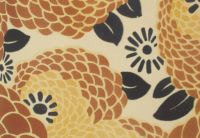
So much interesting material from library and museum collections is becoming available online. It must be intensive work to get it up there, and it seems now as if the technology has been learned and the labour put in, and now we are getting the results. The latest example that caught my attention was the Sydney Powerhouse Museum’s Electronic Swatchbook which displays fabric designs from the 1830s to the 1920s.

Out of curiosity just then I went to check on the Victoria and Albert Museum of Decorative Arts. I visited there many years ago, and loved their collection of textiles, embroidery, laces and so on. They also now have an online image database.

OPML

I feel like I have been away, and in a way I have. I’ve been playing around with Dave Winer’s OPML editor and outliner which also has a blogging tool. I only have a hazy idea of the technical side of it, but it’s addictive.